Texas heat guide

Outdoor Structures in Central Texas: What Holds Up in the Heat

The best outdoor structure for Central Texas is not just the one that looks good online. Heat, UV, wind, drainage, finish maintenance, anchoring, and replacement parts all affect how the structure holds up after installation.

Use this guide to compare material directions before you buy, then narrow the choice around your surface, shade goals, maintenance tolerance, and manufacturer specs.

Compare materials
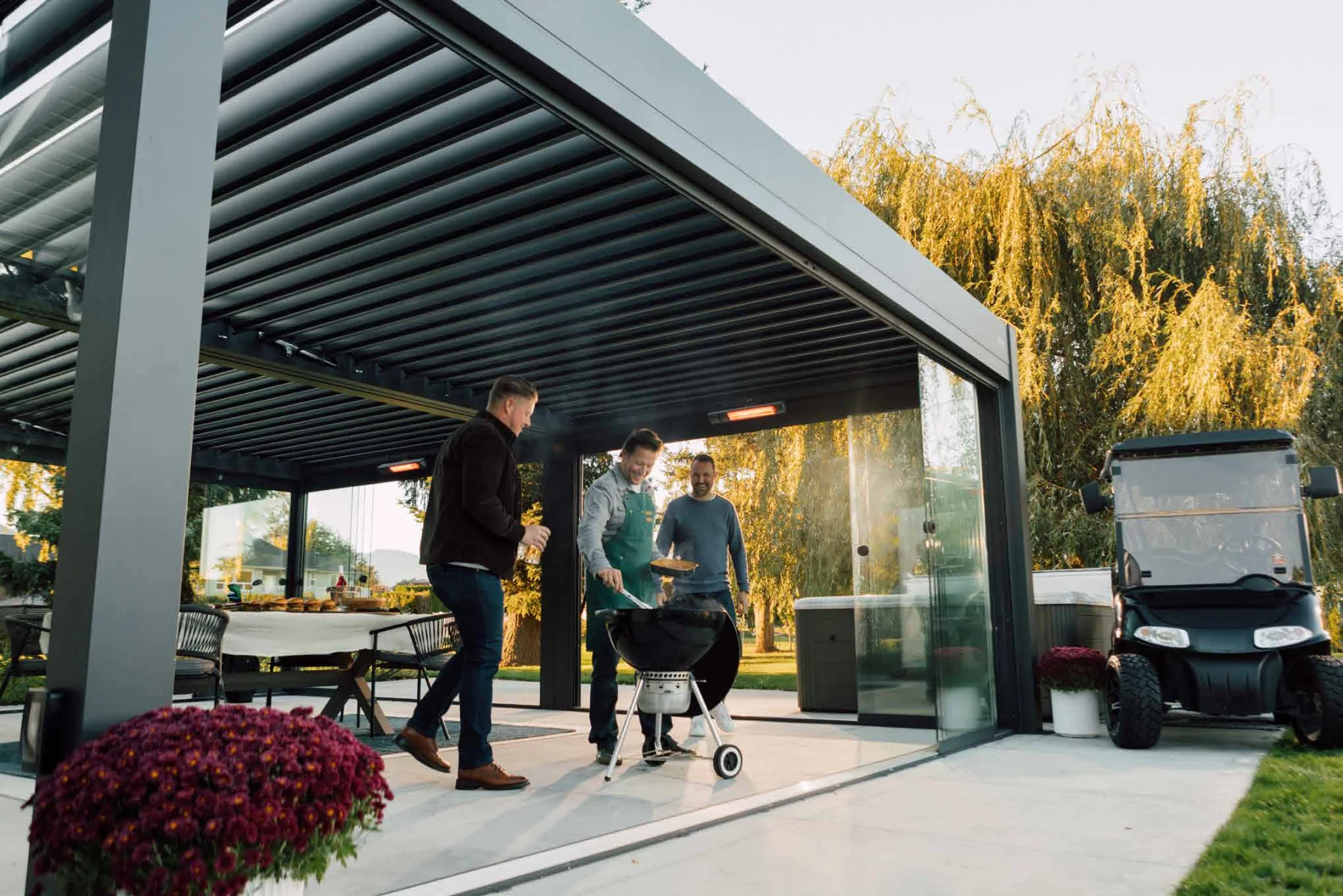
PERGOLUX Series 4 louvered pergola with glass walls over an outdoor dining area

Texas conditions

Heat is only one part of the buying decision

National Weather Service heat guidance treats full sun as a meaningful exposure factor, and UV guidance matters for people and materials. For outdoor structures, the practical question is how the product handles sun, moisture, wind, and maintenance after the first season.

Heat and direct sun

Central Texas outdoor structures live through long stretches of high heat, full sun, and high UV exposure. Shade helps people, but materials still need finish, fastener, roof, and warranty attention.

Color and roof shape

Dark colors absorb more heat than lighter finishes, and black steel or aluminum can become very hot to the touch. Roof shape also affects comfort underneath: a low, closed metal hardtop can feel hotter, while a higher pavilion-style roof or vented roof can allow better airflow.

Severe weather and wind

Thunderstorms, gust fronts, and occasional severe wind make anchoring, surface selection, frame rigidity, and manufacturer wind guidance part of the buying decision.

Short cold snaps and moisture

Texas is hot, but outdoor structures also see rain, humidity, freeze-thaw swings, and drainage issues. A product that handles sun still needs a surface and maintenance plan.

Material comparison

Cedar, treated pine, aluminum, and polycarbonate all have tradeoffs

The right material depends on whether the homeowner values natural appearance, lower maintenance, adjustable shade, lower cost, or a specific roof style.

Cedar

Where it can work

A strong premium look with natural outdoor appeal. It can work well when the owner accepts maintenance as part of the product.

What to check

UV, moisture, checking, fading, and warranty maintenance language. Many wood kits require sealant, stain, or water-repellent care on a schedule.

Treated pine

Where it can work

Often more affordable and widely used outdoors. It can be a practical choice when budget matters and the finish plan is clear.

What to check

Movement, checking, finish maintenance, fastener compatibility, and whether the kit is designed for the exposure and roof load you expect.

Aluminum

Where it can work

A common low-maintenance direction for modern pergolas and louvered systems. It avoids wood refinishing but still depends on coating quality, drainage, and anchoring.

What to check

Powder coat quality, color, hot-to-touch surfaces, corrosion language, moving-part maintenance, drainage, wind guidance, and replacement-part access.

Polycarbonate roofing

Where it can work

Useful when you want light transmission with some UV-blocking roof performance. Specs vary by panel, tint, thickness, and installation system.

What to check

UV coating, heat gain, hail language, expansion gaps, fasteners, panel orientation, warranty limits, and whether the roof creates the shade you actually want.

Color and finish

Where it can work

Lighter roof and frame colors can reduce heat absorption and make the space feel more comfortable in full sun. Dark finishes can look sharp, but they usually run hotter.

What to check

Color, gloss, powder coat, roof-panel tint, and whether posts, rails, louvers, and handles could get too hot for kids to touch during peak sun.

Structure type

Hardtop, soft-top, fixed roof, and louvered systems solve different Texas problems

Hardtop gazebo

Usually the stronger Texas choice compared with a fabric canopy when the surface, anchoring, roof drainage, and wind guidance are appropriate for the site. Metal hardtops can also radiate and hold heat under the roof, especially with dark colors, low rooflines, or limited ventilation.

Soft-top gazebo

Can be useful for lighter seasonal shade, but fabric tops usually need more attention around wind, UV exposure, replacement parts, and storm removal.

Fixed-roof pergola or pavilion

Good when you want a defined shade or shelter zone. Pavilion-style roofs, taller rooflines, open gables, and vented designs can improve airflow compared with a lower closed roof. The roof material, pitch, drainage, and surface attachment still matter.

Louvered pergola

Often attractive for Texas because shade and rain control can be adjusted, but moving louvers, drainage, motors, and alignment make product quality and installation more important.

Manufacturer specs

What to look for before you buy

A product can look strong in photos and still be a poor fit for the surface, exposure, maintenance expectations, or install plan. Check the specifications and warranty language before the boxes show up.

Wind guidance, anchoring instructions, and approved surface types

UV coating, finish system, water-repellent, stain, or sealant requirements

Roof material, frame color, touch temperature, ventilation, drainage path, gutter design, and expansion allowances

Fastener type, corrosion resistance, and coating warranty language

Replacement-part availability for roof panels, louvers, canopies, motors, or screens

Maintenance schedule and exclusions that could affect warranty coverage

For specific product recommendations

Send the product links you are comparing, the city/ZIP, install surface, shade goals, maintenance preference, and photos of the install area. The answer depends on the real site and the exact model.

Buying path

Choose based on maintenance tolerance, not just material name

You want the lowest maintenance path

Start with aluminum, hardtop, or louvered systems and compare the finish, wind, drainage, and warranty details instead of shopping by product photo alone.

You want the warm wood look

Cedar and treated wood can work, but make the maintenance schedule part of the decision. UV protection, sealant, stain, and drainage are not optional details.

You are choosing between models

Send the product links, surface photos, city/ZIP, and priorities. The right answer depends on shade goals, maintenance tolerance, surface, and budget.

FAQ

Texas outdoor structure questions

What outdoor structure holds up best in Texas heat?

There is not one best structure for every Texas backyard. Low-maintenance aluminum, hardtop gazebos, and quality louvered pergolas are often strong directions, but the best choice depends on shade goals, surface, wind guidance, anchoring, drainage, maintenance tolerance, and manufacturer specifications.

Is cedar good for a gazebo in Central Texas?

Cedar can be a good premium-looking material, but it still needs maintenance. UV exposure, moisture, checking, fading, and manufacturer sealant or stain requirements should be reviewed before buying.

Are aluminum pergolas better than wood in Texas?

Aluminum pergolas are usually lower maintenance than wood because they do not need staining or sealing, but coating quality, drainage, corrosion language, moving parts, and anchoring still matter. Wood can still be the right choice when the owner wants that look and accepts the maintenance plan.

Is a hardtop gazebo better than a soft-top gazebo in Texas?

For a permanent backyard structure, a hardtop gazebo is usually a more durable direction than a soft-top canopy. Soft tops can work for lighter seasonal shade, but fabric, wind, UV, and replacement-top availability should be reviewed carefully.

Does color or roof style matter for Texas heat?

Yes. Darker roofs and frames usually absorb more heat than lighter finishes. Roof style matters too: a closed metal hardtop can feel hotter underneath when airflow is limited, while a higher pavilion-style roof, open gable, or vented roof can help hot air move out of the shaded area.

Are black steel or aluminum pergolas too hot for kids to touch?

They can get very hot in direct Texas sun. Black steel, dark aluminum, louvers, posts, rails, and handles may become uncomfortable or unsafe for small children to touch during peak heat. If kids will use the space, consider lighter finishes, shade timing, roof airflow, and where touch points are located.

What specs should I check before buying a gazebo or pergola?

Check wind guidance, anchoring instructions, surface requirements, roof material, roof color, ventilation, drainage, UV protection, finish maintenance, warranty exclusions, replacement-part availability, and whether the kit has clear installation instructions.

Comparing products for a Central Texas backyard?

Send the product links, city/ZIP, surface type, shade goals, delivery status, and install-area photos. HandiestPRO can help you evaluate the installation path before you buy.